
Tim Sweeney
The CEO who still compiles the engine at 3 a.m. and calls it a Tuesday.

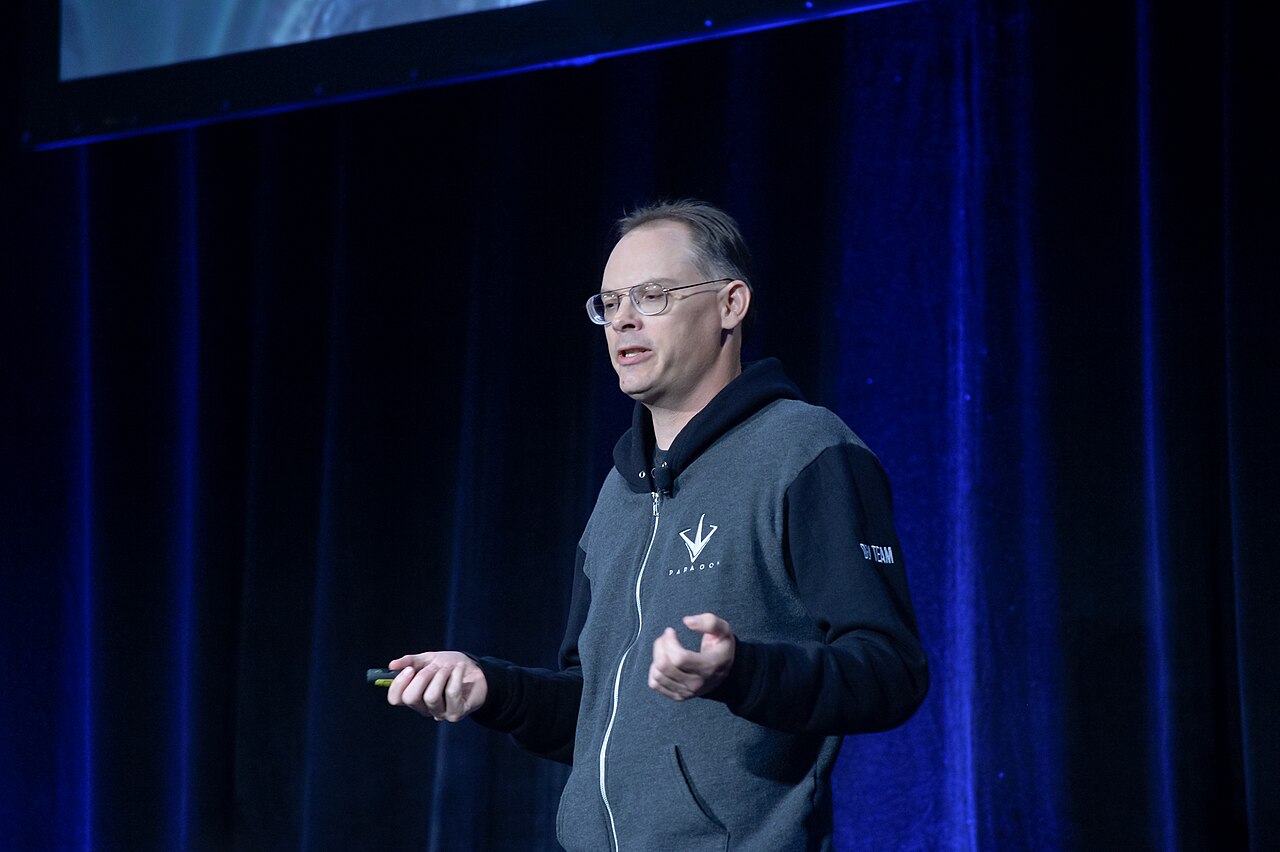
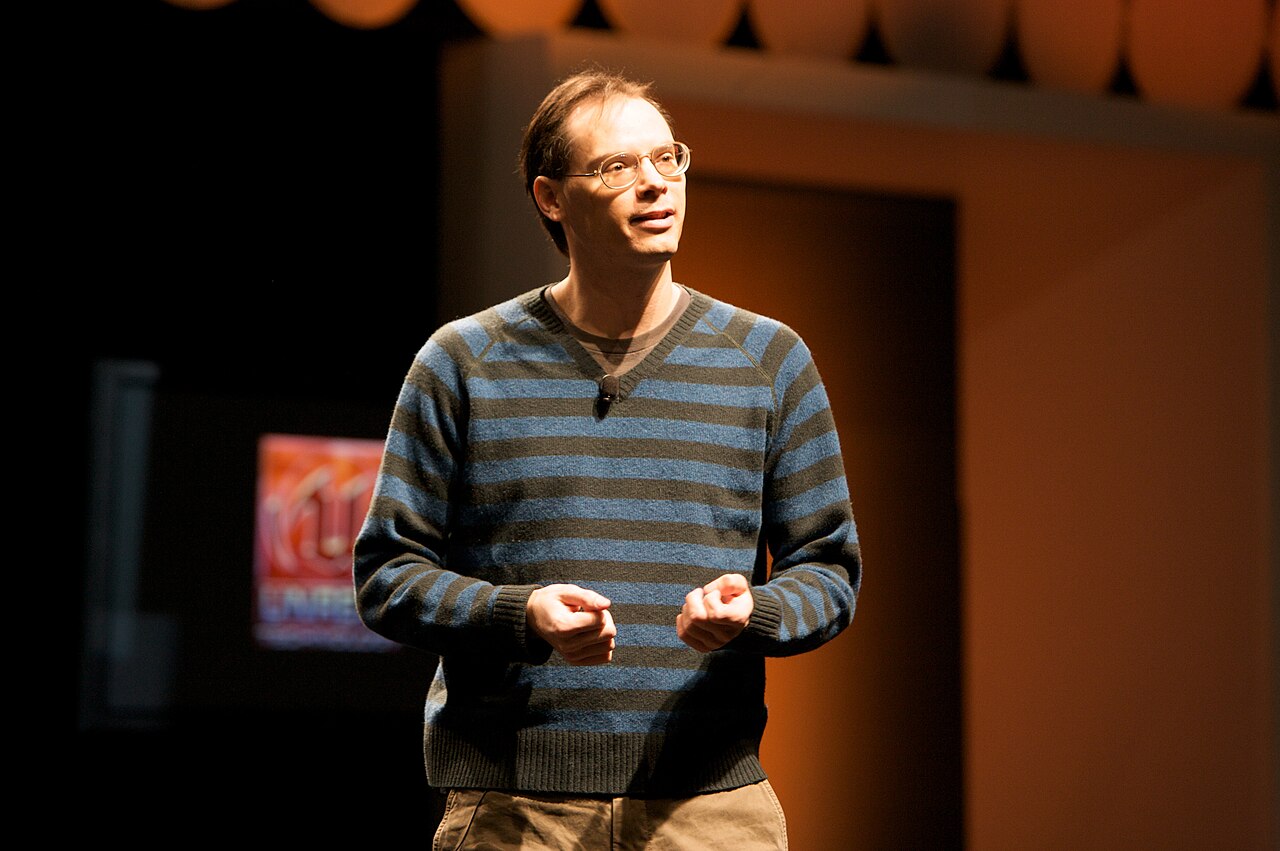
Official GDC · CC BY 2.0
Tim Sweeney is the founder, CEO, and chief technology officer of Epic Games, the studio behind the Unreal Engine and the Unreal franchise. In the context of Unreal Tournament (1999), Sweeney served as the driving creative and technical force: he wrote core engine code, directed gameplay systems, and set the design vision that turned the single-player Unreal into the fast, weapon-heavy arena shooter that defined competitive FPS in the late 1990s. His legacy extends far beyond a single title. Sweeney's insistence on shipping a reusable, extensible game engine—first proven in Unreal (1998) and refined in Unreal Tournament—established a development model that would later power Gears of War, Fortnite, and hundreds of third-party titles. He is widely recognized in the industry for remaining a hands-on C++ programmer long after the company grew into a global publisher.
- Role
- Founder, CEO, and lead engine programmer
- Affiliation
- Epic Games
- Key creation
- Unreal Engine (first shipped in Unreal, 1998)
- Unreal Tournament role
- Creative director and core C++ developer
- Education
- University of Texas at Austin (Computer Science)
- Known for
- Writing production engine code as CEO; hands-on technical leadership
Lore & Background
In the internal culture of Epic Games during the Unreal Tournament development cycle, Sweeney occupied a role that defied the typical executive archetype. While the team of roughly a dozen developers hammered out new weapons, map layouts, and the dual-pistol system, Sweeney was simultaneously rewriting rendering passes and tuning the physics solver in C++. Colleagues described a workspace cluttered with monitor stacks, cold coffee, and half-finished shader experiments. The engine was not a black box to him; it was a living document he edited line by line, and that proximity to the metal is what allowed Unreal Tournament to push hardware that was, at the time, barely capable of handling the frame rates the game demanded. Sweeney's design philosophy for the Tournament was deliberately adversarial to the single-player narrative structure of Unreal. He wanted every weapon to feel distinct in its handling curve, every map to reward aggressive movement, and the spectator system to make watching a 32-player deathmatch as compelling as playing it. These decisions were not delegated to a design document; they emerged from Sweeney's own playtesting sessions, where he would queue into internal servers, get eliminated, and immediately open the source to adjust a recoil table or a jump-height constant. The broader industry impact is difficult to overstate. By treating the engine as a product in its own right—something that could be licensed, iterated, and separated from any single game—Sweeney created a business model that would sustain Epic through the 2000s and into the free-to-play era. The same C++ codebase that powered the dual pistols in Unreal Tournament would, through successive engine versions, underpin an entirely different genre of battle-royale and open-world titles, all traceable to the architectural decisions made in that Austin office in the late 1990s.
In Their Own Story
The office lights in Austin were off except for the blue glow of a single monitor. It was past two in the morning, and the only sound was the mechanical clack of a keyboard and the low hum of a tower fan. On the screen, a line of C++ scrolled past: a new impulse response for the Enforcer's recoil pattern. He compiled, launched the editor, and dropped into a half-finished map where the geometry still showed its wireframe bones. He fired the Enforcer at a wall, watched the crosshair climb, and frowned. One more constant. One more compile. Outside, the Texas heat pressed against the window glass, indifferent. Somewhere in the build, a spectator camera tracked a phantom player who no longer existed, still running its idle animation in the void. He left it. It would be in the next patch. He saved, closed the editor, and sat for a moment in the dark, listening to the fan spin down.
Reader's Guide
Tim Sweeney, a computer science graduate from the University of Texas at Austin, was already the primary engine programmer. The internal engine he built became the foundation for Unreal (1998), the first title to ship on what would be formally branded the Unreal Engine. Unreal Tournament (1999) represented a deliberate pivot. Sweeney directed the team to strip away the narrative scaffolding of Unreal and focus on pure arena combat: fast movement, a deep weapon roster, and a spectator system designed for LAN parties and early online play. Key design decisions—dual-wield pistols, the Enforcer's high-damage/low-fire-rate profile, the jump-height tuning that enabled the now-iconic bhop—were iterated directly in the engine by Sweeney and the core programming team. The lasting impact is twofold. Within the FPS genre, Unreal Tournament set the competitive template that titles like Quake III and later Counter-Strike would respond to for the rest of the decade. Within the broader industry, it proved that a game engine could be a durable, licensable product independent of any single shipped title. That architectural choice, made in a small Austin office, would eventually allow the Unreal Engine to power hundreds of third-party games across every major platform, making Sweeney's late-1990s decisions one of the most consequential technical investments in gaming history.
Did You Know?
- Tim Sweeney is widely known in the industry for personally writing and committing C++ code to the Unreal Engine even while serving as CEO of a company with thousands of employees.
- The Unreal Engine was first shipped as part of the 1998 game Unreal, before the brand name 'Unreal Tournament' existed; the engine's architecture was already designed to be separable from the game itself.
- Unreal Tournament's dual-pistol system, where the player fires two pistols simultaneously, was a deliberate design choice to create a distinctive feel that set the game apart from single-pistol shooters of the era.
- Sweeney's hands-on coding style became a defining cultural marker of Epic Games, influencing how subsequent engine teams structured their development around a small core of programmers who maintained deep familiarity wit
Gallery
Frequently Asked Questions
Who is Tim Sweeney?
Tim Sweeney is the founder, CEO, and chief technology officer of Epic Games, the studio behind the Unreal Engine and the entire Unreal franchise. He earned a Computer Science degree from the University of Texas at Austin and has led Epic since its founding, remaining the studio's primary technical voice.
What did Tim Sweeney actually do on Unreal Tournament?
Sweeney went far beyond an executive title: he personally wrote core C++ engine code and directed the gameplay systems that pivoted the project from a single-player narrative game into the fast, weapon-saturated arena shooter the community knows. He set the overall design vision and stayed hands-on in the codebase throughout development.
Why is Tim Sweeney important to the UT community?
His insistence on building a reusable, extensible engine rather than a one-off asset gave players a technical foundation that outlived any single release. The competitive FPS culture of the late 1990s was shaped directly by the systems he architected and the code-first engineering culture he enforced at Epic.
Does Tim Sweeney still write production engine code as CEO?
Yes—Sweeney is widely recognized for continuing to commit production C++ personally long after taking on the CEO role, a habit fans affectionately summarize as 'the CEO who compiles at 3 a.m. and calls it a Tuesday.' That hands-on technical leadership remains a defining part of his public identity within the community.
What was Tim Sweeney's background before leading Epic?
Sweeney studied Computer Science at the University of Texas at Austin and then founded Epic Games, bringing a code-first, engineer's mindset to game development from day one. That technical grounding is what allowed him to stay the primary architect of the Unreal Engine even as the company scaled.
More in Development & Legacy
Related in Unreal Tournament
Links follow this subject's own source article.
Elsewhere in the Unreal Tournament universe
Spotted an error? Know more?
This is a living reference — every entry is fact-audited, and reader corrections feed straight into our audit queue. Suggest an edit · See this site's audit record