
Capture the Flag
Two teams, one flag, and the long road home under fire.

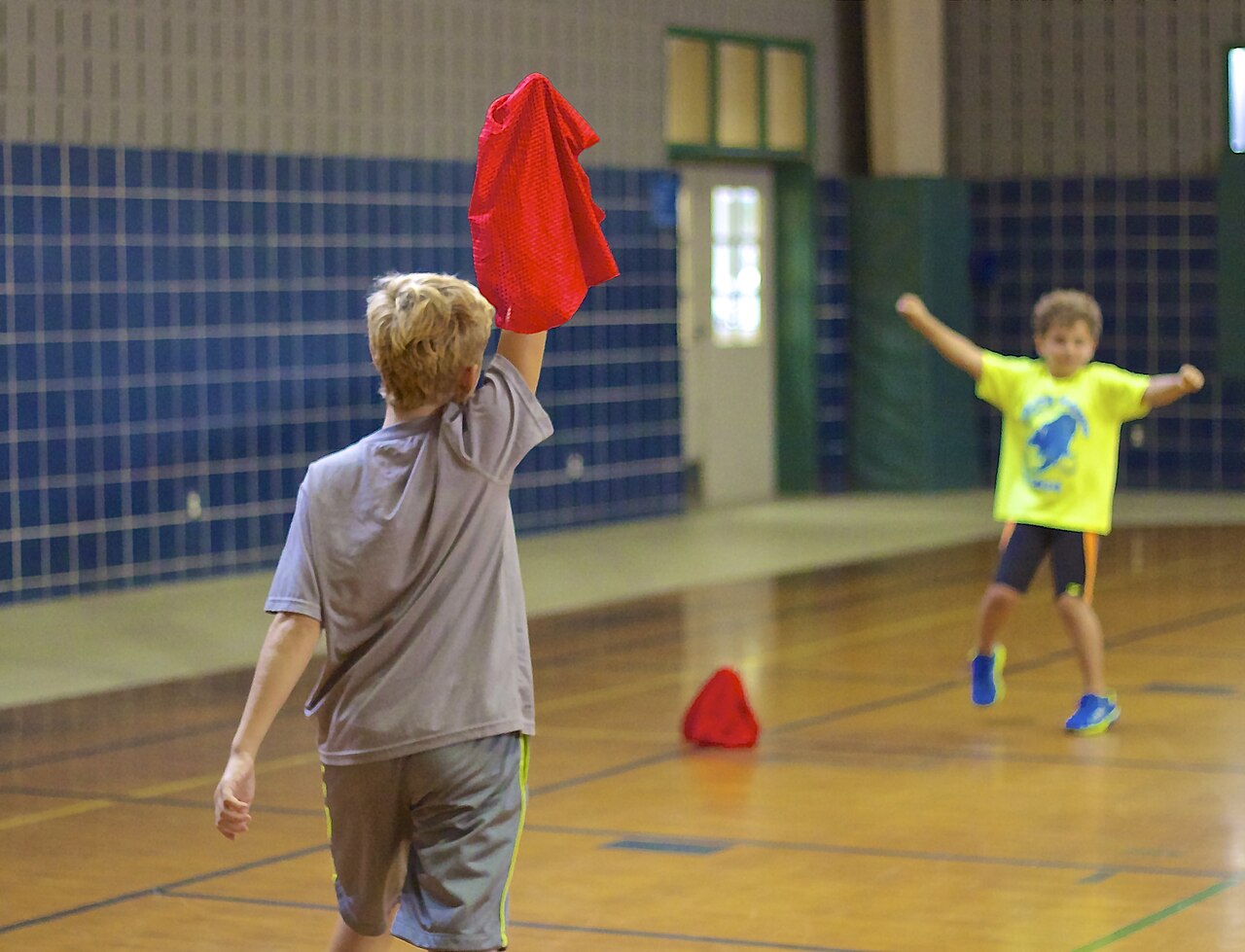
Lydia Liu · CC BY 2.0
Capture the Flag (CTF) is a team-based multiplayer game mode in the Unreal Tournament series in which two teams compete to steal the opposing team's flag and return it to their own base. It debuted as one of the original game types in Unreal Tournament (1999) and carried forward through Unreal Tournament 2003, Unreal Tournament 2004, and Unreal Tournament 3 (2007), remaining a staple of the franchise's competitive and casual multiplayer offerings. Unlike pure kill-count modes, CTF rewards coordinated pushing, flag defense, and objective-focused play. The flag carrier is highlighted for all players on the server, making the mode a test of both offensive aggression and defensive positioning. Its presence across four major entries in the series underscores its role as a core pillar of the UT multiplayer experience.
- Mode type
- Team-based objective (2+ teams)
- First appears
- Unreal Tournament (1999)
- Also featured in
- Unreal Tournament 2003, Unreal Tournament 2004, Unreal Tournament 3
- Objective
- Steal the enemy flag and return it to your own base
- Flag carrier visibility
- Highlighted and visible to all players on the server
- Flag drop rule
- If the carrier is killed, the flag drops at the point of death
Lore & Background
In the competitive arenas of the Unreal Tournament universe, Capture the Flag is the mode that separates disciplined squads from loose gunfights. Each team defends a flag planted in their base while sending players through the contested middle to seize the enemy standard. The flag is a physical object in the world—visible, grabbable, and vulnerable to being left behind when its carrier falls. The mode's design philosophy across the UT series consistently emphasizes map geometry: two distinct bases, a central corridor or open field, and flanking routes that let a skilled player bypass a defensive line. The flag carrier, glowing and unmistakable to every player on the server, becomes a moving target that can be chased across the entire map, turning a single pickup into a multi-minute sequence of pursuit, cover, and desperate sprint back to safety. Because CTF requires sustained team coordination rather than individual kills, it became a common choice for clan matches and community tournaments throughout the franchise's history. The mode's longevity from the 1999 original through UT3 reflects its enduring appeal as a test of communication, map knowledge, and the willingness to sacrifice a player to protect the flag.
In Their Own Story
The flag sat in its base, a small glowing beacon in the dim industrial corridor. Kael crouched behind the crate, watching the enemy carrier sprint through the middle with the standard in hand—bright, stupid, visible to everyone. Three of his teammates were already converging from the flank. He exhaled, checked his rocket launcher, and waited for the carrier to round the corner. The moment the glow appeared in his crosshair, the whole server seemed to hold its breath. One shot. The flag clattered to the metal floor. Kael jogged over, snatched it, and ran—because now every single enemy on that server was looking at him.
Reader's Guide
Objective: Each team has a flag at its base. A player picks up the enemy flag and must carry it back to their own team's flag point to score. If the carrier is killed, the flag drops where they fell and can be picked up by any player. Scoring and rules: A successful return to base scores a point for the capturing team. The flag carrier is highlighted and visible to all players on the server, making them a priority target. If a flag is dropped, it remains on the ground for a set duration before returning to its base. Matches are typically played to a score limit or time limit. Ideal map type: CTF maps feature two distinct bases connected by a contested central area, with flanking routes on either side. The geometry should allow for both direct pushes and indirect approaches, giving defenders multiple angles to cover while letting carriers choose a safe return path. Evolution across the series: In the 1999 original, CTF established the core loop of steal-and-return. UT2003 and UT2004 refined map design and added more varied flanking geometry, while the competitive scene developed standard strategies like flag defense, mid-control, and coordinated pushes. UT3 carried the mode forward with updated visuals and weapon feel, keeping CTF as a recognized team objective option alongside Domination and Assault. Competitive play: Successful CTF requires a dedicated flag defender, a player who controls the middle to deny or enable pushes, and a carrier who can navigate the return path under pressure. Rocket-jumping and wall-running are not specific CTF mechanics but general UT movement techniques that carriers and chasers alike use to cross open ground quickly or escape pursuers.
Did You Know?
- Capture the Flag was one of the original multiplayer game types available when Unreal Tournament launched in 1999, making it one of the earliest implementations of the mode in a major FPS franchise.
- The flag carrier is highlighted and visible to every player on the server, not just the opposing team, which means friendly players can also see and protect or sacrifice the carrier.
- Across the UT series, CTF maps consistently follow a two-base, contested-middle layout, distinguishing them from the single-point focus of Domination or the linear push of Assault.
- The mode survived four major entries in the franchise, from the 1999 original through Unreal Tournament 3, indicating its lasting role in the series' multiplayer identity.
A Departure from Tournament Lore
The single-player campaign in Unreal Tournament 3 marks a significant narrative break from its predecessors. Rather than centering on the Grand Championship that defined earlier entries, the story unfolds on Taryd, an Earth-like world where the Twin Souls colony is struck by a devastating Necris assault. This attack unleashes the Krall, a bloodthirsty reptilian alien race previously seen in the original Unreal, upon the defenseless human population. The playable protagonists are the Ronin, a small band of survivors of a prior Skaarj attack, who arrive to defend the colony's remaining inhabitants. Their leader, Reaper, is knocked unconscious by a rocket blast but witnesses the Necris High Inquisitor Akasha executing a wounded soldier before losing consciousness. He is later rescued by teammates Othello and Jester and brought to the Izanagi, a megacorporation with a private army. The Izanagi's leader, Malcolm, a celebrated former tournament champion, offers the Ronin a deal: join his forces and he will take the fight to the Necris to avenge the massacre. The campaign then tasks the player with seizing Axon vehicle technology and Liandri Tarydium mines to sustain a war effort against the undead Necris, who have replaced their biological processes with a substance called Nanoblack.
A Roster of Distinct Game Modes
Unreal Tournament 3 offers eight distinct multiplayer modes, each with its own rules and strategic depth. Beyond the familiar Deathmatch, Team Deathmatch, and Capture the Flag, the game introduces several unique formats. Duel operates on a queuing system where the winner stays in the match while the loser returns to the back of the line, with a typical fifteen-minute round decided by kill count. Warfare blends elements of Onslaught and Assault, adding countdown nodes that spawn vehicles or trigger events once captured and defended, plus a special orb for instant node capture. Betrayal places freelancers on teams where a shared kill pot grows, and any member can shoot their own teammates to steal it, then must survive for thirty seconds or forfeit extra points. Greed, inspired by a UT2004 community mod, tasks players with collecting skulls from fallen opponents and delivering them to the enemy base, reusing standard and vehicle CTF maps. Vehicle Capture the Flag adds drivable vehicles to the flag-stealing formula and swaps the translocator for a hoverboard.
Vehicles, Hoverboards, and Mobile Combat
A defining mechanical feature of Unreal Tournament 3 is its approach to vehicle-based gameplay. Vehicles are divided into two faction-specific lineages: the Axon vehicles, which carry over from Unreal Tournament 2004 but with notable gameplay adjustments, and the Necris vehicles, which represent the undead enemy faction. On any vehicle map, every player receives a personal hoverboard, a skateboard-like device that enables rapid traversal across large arenas and allows players to grapple onto a teammate's vehicle. However, the hoverboard is intentionally fragile; a single hit knocks the rider off and disables them for several seconds, leaving them completely exposed. Additionally, no weapons can be fired while riding the board, creating a risk-reward dynamic where speed comes at the cost of offensive capability. This design choice differentiates vehicle maps from standard arenas and adds a layer of vulnerability to what might otherwise be a straightforward traversal tool. The hoverboard also replaces the translocator found in earlier titles, shifting how players reposition during vehicle-focused matches.
Release, Reception, and the Ghost of UT3 X
Unreal Tournament 3 was developed by Epic Games and published by Midway Games, occupying the fourth slot in the Unreal Tournament sub-series and the eighth position in the broader Unreal franchise. The "3" in the title specifically denotes its status as the first franchise entry built on Unreal Engine 3. The game launched on November 19, 2007, for Windows, followed by a PlayStation 3 release on December 10 of that year, and an Xbox 360 version on July 3, 2008. Ports for OS X and Linux were initially planned but ultimately cancelled. Critics responded favorably, and the title surpassed one million copies sold worldwide. In a curious postscript, a free-to-play variant called Unreal Tournament 3 X was leaked in late 2022, only to be officially cancelled the following year, leaving players with an unfinished glimpse of what might have been a modernized, accessible version of the 2007 classic.
Gallery
Frequently Asked Questions
What is Capture the Flag in Unreal Tournament?
CTF is a team-based objective mode in which two or more teams race to steal the enemy's flag and carry it back to their own base. It rewards coordinated pushes, disciplined flag defense, and objective-focused play rather than raw kill counts.
What happens if I die while carrying the flag?
The moment the carrier is eliminated, the flag drops at the exact point of death and becomes pickable by any player on the server. This rule makes carrying the flag a high-risk commitment, since a single well-timed kill can undo your entire push.
Can everyone see where the flag carrier is?
Yes—the flag carrier is highlighted and visible to every player on the server, so you can't simply sneak around the map with the flag. This built-in visibility keeps the mode fast-paced and forces the opposing team to actively hunt the carrier.
Which Unreal Tournament games include Capture the Flag?
CTF debuted as one of the original game types in Unreal Tournament (1999) and has carried forward through UT2003, UT2004, and UT3 (2007). It remains a staple of both competitive ladders and casual multiplayer across the franchise.
How is CTF different from Team Deathmatch?
While Team Deathmatch is decided purely by who racks up more eliminations, CTF requires you to complete a concrete objective—steal the flag and return it to your base. That shift makes coordinated team play, flag defense, and objective pushing far more valuable than individual frag counts.
More in Gameplay & Modes
Elsewhere in the Unreal Tournament universe
Spotted an error? Know more?
This is a living reference — every entry is fact-audited, and reader corrections feed straight into our audit queue. Suggest an edit · See this site's audit record