
Command
Hold the high ground, control the command center, and let the metal catwalks do the rest.

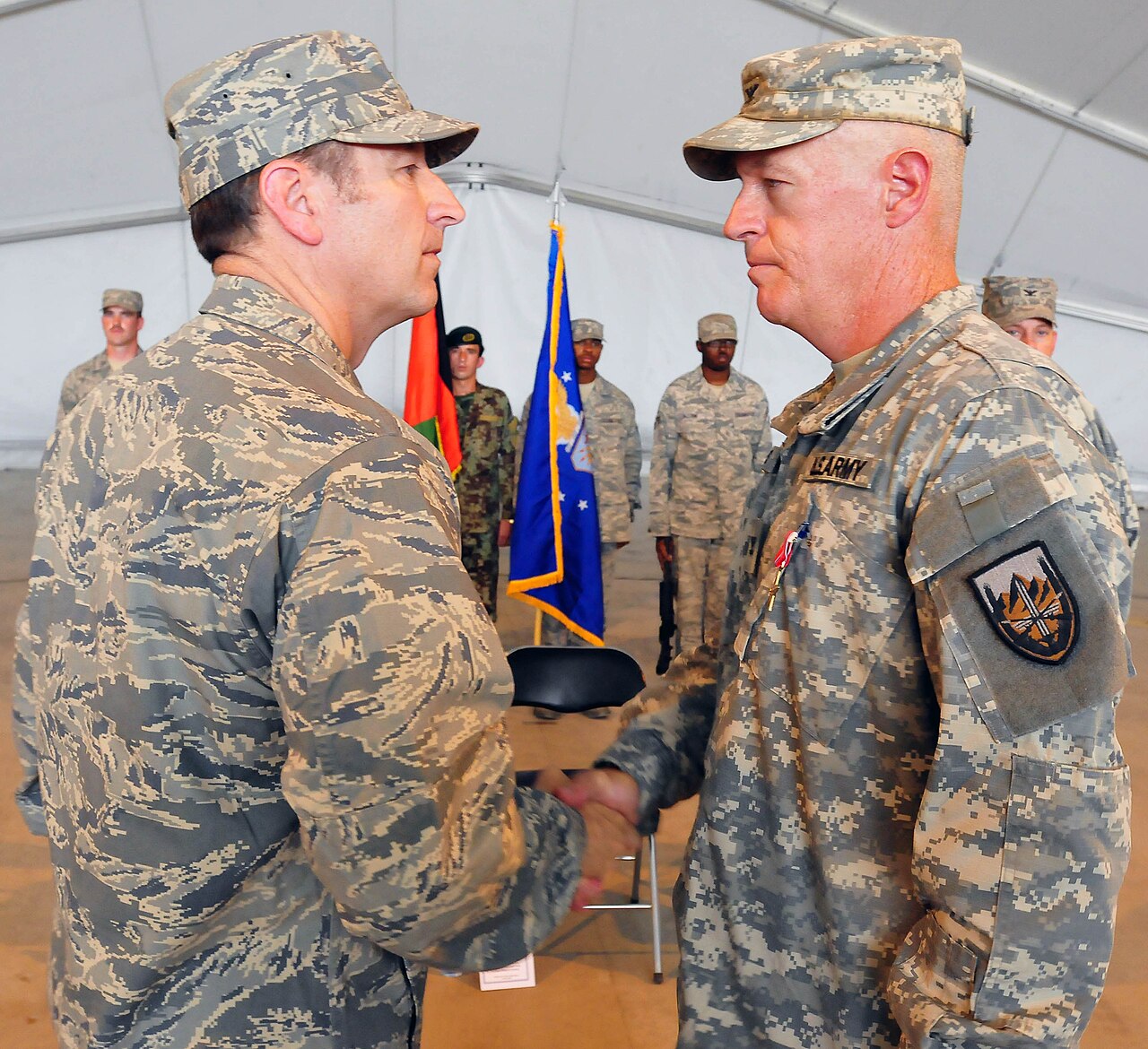
NATO Training Mission-Afghanistan MC2 David Quillen/Public Affairs, KAIA · Public domain
Command is a multiplayer map in Unreal Tournament (2004), developed by Epic Games. It presents a large, open military-industrial complex built around a central command structure, with elevated catwalks, metal walkways, and a series of interconnected platforms that reward both aggressive pushes and careful positional play. The map's design emphasizes verticality and sightline control, making it a staple for team-based modes where holding high ground and rotating between flanking routes is critical. Its relatively open central areas contrast with tighter corridors and elevated perches, creating a rhythm of close-quarters skirmishes and longer-range engagements.
- Game
- Unreal Tournament (2004)
- Developer
- Epic Games
- Type
- Multiplayer map
- Visual theme
- Military / Industrial
- Best suited modes
- Team Deathmatch, Team CTF, Domination
- Map scale
- Medium-to-large
Lore & Background
Command is set within a forward operating base or military installation, its architecture suggesting a chain-of-command facility where officers oversee operations from a raised central platform. The surrounding structures—storage bays, maintenance corridors, and open staging areas—imply a garrison prepared for sustained engagement rather than a single decisive battle. In the broader context of Unreal Tournament's multiplayer universe, the map functions as a neutral arena where rival squads clash over territory. There is no single narrative campaign attached to it; rather, it exists as a stage, a proving ground where the mechanical skills of players are tested against the geometry of the environment. The military aesthetic reinforces the franchise's long-standing association with futuristic armed conflict. The map's design philosophy leans into readability: wide sightlines across the central plaza, clearly defined elevated positions, and multiple approach vectors ensure that players can quickly orient themselves while still finding enough nooks and elevated perches to create tactical depth.
In Their Own Story
The hum of ventilation fans is the only sound in the staging bay. You crouch behind a crate of munitions, watching the central command platform through the gap between two support struts. Three figures move across the catwalk above—boots ringing on grated metal, weapons raised, scanning the open floor below. You count your ammo. You count their rotations. The next push will come from the east corridor, you're sure of it. You shift your weight, ease the bolt on your shotgun, and wait for the first one to step off the walkway and into your line of fire. The command center will change hands again. It always does.
Reader's Guide
Command's visual identity is grounded in a military-industrial palette: brushed steel, olive-grey panels, warning stripes, and the occasional flickering overhead light. The central command platform sits elevated above a wide open plaza, giving it a commanding (pun intended) vantage over the entire map. Key areas include the raised central platform, the surrounding catwalks and elevated walkways, the lower-level corridors and storage bays flanking the plaza, and the open staging areas at the map's edges. Sightlines are generous across the central floor, but the elevated positions break up the horizontal plane, creating natural cover and forcing players to think in three dimensions. The map suits Team Deathmatch and Team CTF well, as the multiple approach vectors and vertical layers keep rotations fluid. Domination also works, with the central platform and flanking perches serving as natural control points. Free-for-all can feel chaotic given the open sightlines, but skilled players who master the elevated positions will thrive. Design-wise, the map rewards map knowledge: knowing which catwalks offer safe flanking routes, which lower corridors are ambush-friendly, and how quickly you can rotate from one side of the plaza to the other separates casual play from competitive.
Did You Know?
- Command's elevated catwalks and central platform create a three-layer vertical play space, uncommon among UT2004's more horizontally oriented maps.
- The map's open central plaza makes it a frequent choice for Team Deathmatch lobbies, where the wide sightlines favor players comfortable with long-range engagements.
- Unlike many UT2004 maps that lean heavily on organic or alien aesthetics, Command sticks to a purely human military-industrial design, giving it a distinct visual identity in the roster.
- The map's multiple elevated entry points to the central platform mean that controlling it requires holding several angles simultaneously, making it a test of team coordination.
Gallery
More in Maps & Locations
Elsewhere in the Unreal Tournament universe
Spotted an error? Know more?
This is a living reference — every entry is fact-audited, and reader corrections feed straight into our audit queue. Suggest an edit · See this site's audit record